Humanoid Robots Working 24/7: Is the New Industrial Revolution Starting in China?
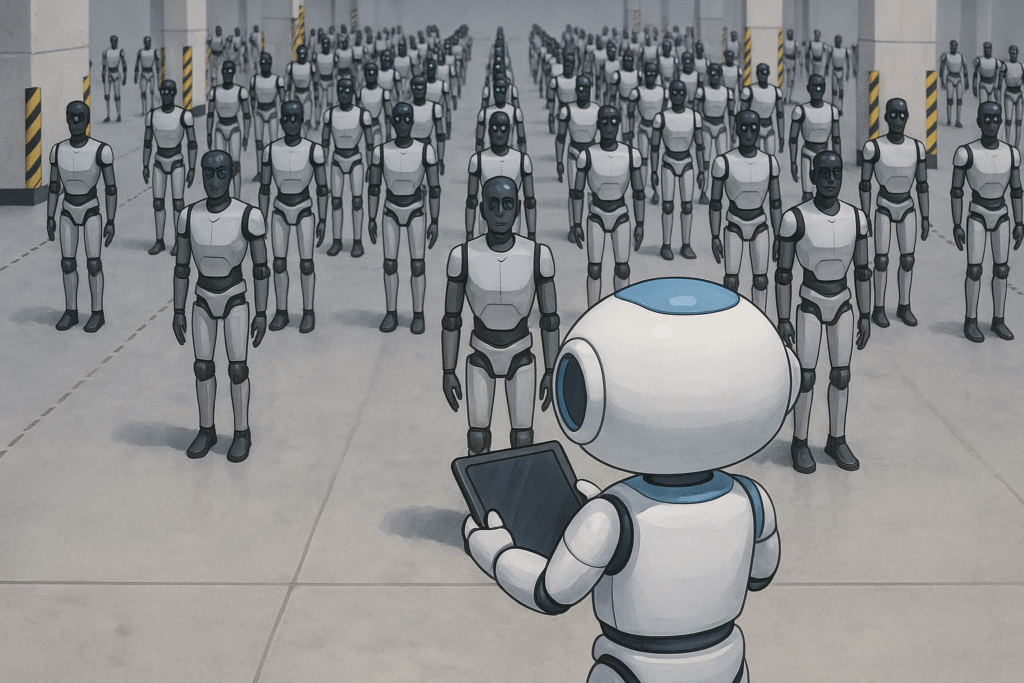
One of the most impactful milestones in industrial automation has just been reached. China has begun deploying a true “army” of humanoid robots to work full-time in factories, 24 hours a day, reshaping the country’s production model and triggering a global industrial paradigm shift. The question is: are we witnessing the birth of the next industrial revolution?
What Are Humanoid Robots?
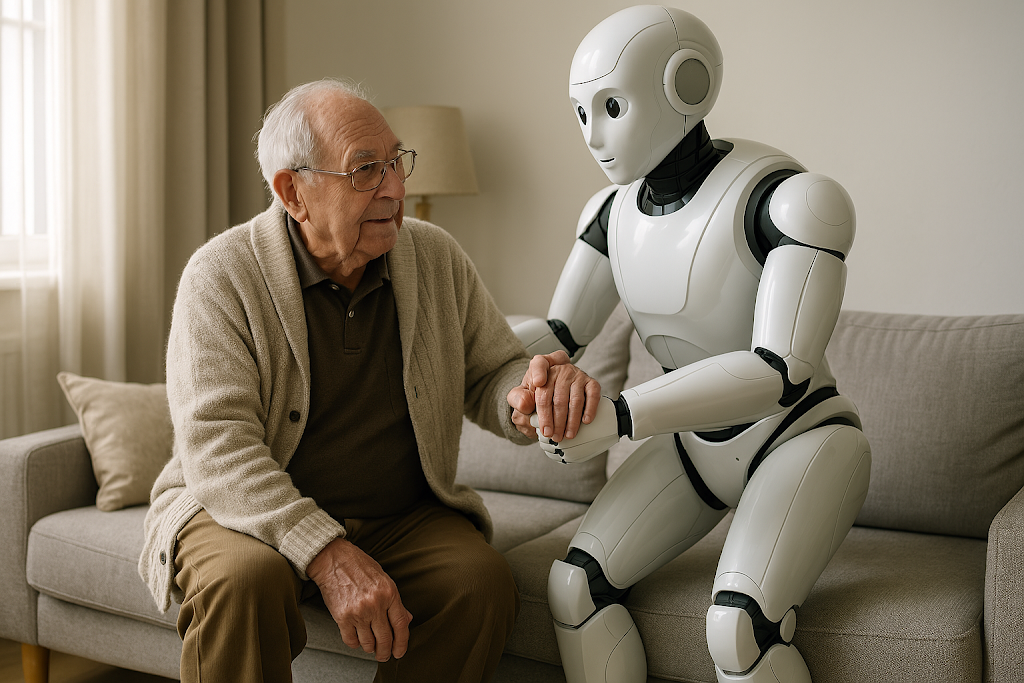
Humanoid robots are machines designed to mimic the shape and movements of the human body. Equipped with arms, legs, a head, and advanced sensors, they can perform physical tasks, interpret commands, make decisions, and even interact with humans at a basic level. These robots are not just mechanical automatons; many are embedded with artificial intelligence, enabling them to learn from experience and optimize their performance over time.
China Takes the First Step Toward Full Automation
Recently, Chinese company Fourier Intelligence began mass deployment of humanoid robots to operate in the country’s factories. The GR-1 models are capable of working nonstop, operating 24 hours a day. This initiative marks a strategic shift not just in robotics but in the global industrial economy. Instead of merely automating tasks with robotic arms or smart conveyors, China is now putting humanoid robotic entities on par with human workers, taking over complex and adaptive roles.
GR-1 Robot Specifications
- Height: 1.65 meters
- Weight: about 55 kg
- Load capacity: up to 50 kg
- Speed: 5 km/h
- Autonomy: Continuous operation with automated recharging cycles
- Integration: Compatible with industrial systems via IoT and AI
Beyond physical capabilities, the GR-1 is equipped with algorithms that enable voice command recognition, adaptive actions based on environmental variables, and basic communication with human supervisors.
Labor Market Impacts
Naturally, the rise of humanoid robots raises sensitive questions about the future of employment. In a scenario where robots work 24/7 without breaks, rest, salaries, or labor rights, what happens to human workers? The answer is complex. In the short term, operational jobs will be impacted. However, new roles will emerge in maintenance, supervision, programming, and systems management. The transformation, therefore, demands workforce reskilling.
A New Industrial Revolution?
Industrial Revolutions have always been marked by technological disruption: from the steam engine to electric motors, from automation to digitalization. Now, with the large-scale introduction of autonomous humanoid robots, some experts suggest we are entering the Fifth Industrial Revolution—an era of symbiotic collaboration between humans and cognitive machines.
The uninterrupted and flexible production enabled by AI and robotics paves the way for factories operating 24/7 with minimal human intervention. This means lower cost per unit, greater standardization, and the ability to respond faster to market demands. For companies, this means competitiveness. For governments, it means a new regulatory and social challenge.
Use Cases in Chinese Factories
The first GR-1 robot units are being implemented in sectors such as:
- Electronics assembly
- Internal logistics and cargo handling
- Visual quality inspection
- Preventive maintenance with sensors
- Collaborative work with humans on hybrid lines
The robots are also being used to test products, handle hazardous substances, and even operate precision tools with more stability than a human operator.
Ethical and Regulatory Challenges
The intensive use of humanoid robots raises ethical and regulatory issues. Who is liable for accidents caused by AI errors? How can we ensure robots are not used to massively replace human roles, causing social disruption? A regulatory framework that balances innovation and responsibility is essential. The creation of a “robotics ethics framework” is already under discussion in European countries and international forums.
How Other Countries Are Reacting
The United States, Japan, South Korea, and Germany are closely monitoring China’s move. While Japan leads in assistive robot research, and the U.S. invests in military and logistics robots, China is innovating by placing humanoids on production lines with unprecedented intensity. The fear of losing competitiveness is accelerating global adoption of industrial humanoids.
Humanoid Robots and the Future of Work
As humanoid robots gain traction, technical professions related to robotics, programming, AI design, and intelligent systems engineering are becoming more prominent. The future of work won’t be “humanless,” but will favor humans prepared to manage intelligent systems. The competitive edge will belong to those who can design, train, adapt, and supervise robots effectively.
Conclusion
The humanoid robots now operating 24/7 in China are more than a tech novelty—they represent the beginning of a new industrial cycle. This transformation promises productivity, efficiency, and safety gains but also brings regulatory, social, and ethical challenges that must be addressed responsibly.
Meanwhile, the world watches China redefine the rules of manufacturing. If the first Industrial Revolution began with mechanical looms, this one is being rewritten with chips, sensors, and embedded artificial intelligence in humanoid forms. The revolution has begun. And there’s no turning back.
📣 Keep Exploring the Future
Want to learn more about how technology is reshaping the world of work? Check out other articles on our blog:
- AI and Modern Warfare: How Other Countries Are Following Ukraine’s Steps
- AI for Pets: Understanding Animal Behavior
💌 Subscribe to our newsletter to receive exclusive content, free PDFs, prompt templates, and much more.
❓Frequently Asked Questions (FAQ)
- 1. Do humanoid robots completely replace humans in factories? Not entirely. They replace repetitive and physical tasks, but strategic decision-making and supervision remain human.
- 2. Are humanoid robots expensive? They’re still mid-to-high cost investments, but prices are dropping due to mass production.
- 3. Is it safe to have robots working 24/7? Yes, provided proper maintenance and safety protocols are in place.
- 4. How to prepare for this new reality? Study areas like automation, programming, AI, and intelligent systems engineering.
- 5. Will this cause mass unemployment? It will require reskilling. Some roles will disappear, others will emerge. Adaptation is key.
- 6. Will this trend spread outside China? Yes. Industrialized nations are already testing similar solutions. The trend is global.