What Is Web3 and How It Will Transform the Internet
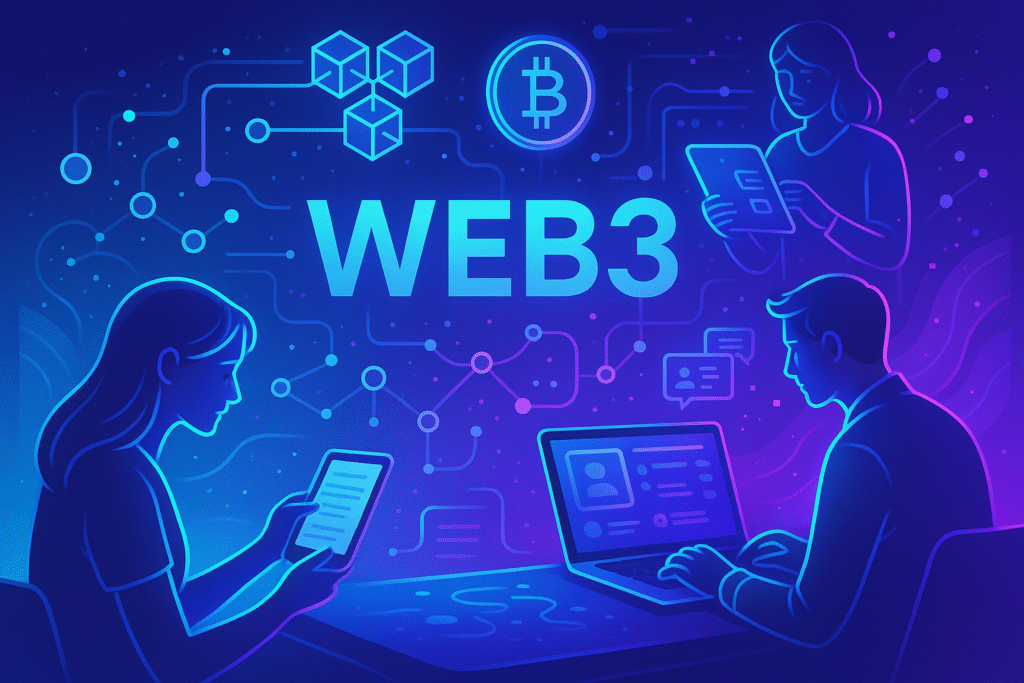
The internet is constantly evolving. From the early days of static pages in Web 1.0, through the interactive, user‑generated content era of Web 2.0, we are now approaching a new phase: Web3. But what exactly is Web3, and how does it promise to change the way we interact online?
What Is Web3?
Web3 refers to the next generation of the internet, characterized by decentralization and use of technologies such as blockchain (a distributed ledger technology designed to bring more security to the network). Unlike Web 2.0, where large companies control most of the data and services, Web3 aims to hand control back to users, enabling them to own and manage their own data and online interactions.
This shift is driven by the desire to reduce reliance on intermediaries and centralized control. In Web3, trust isn’t built solely on corporate platforms — it’s built on code, transparency and collective governance.
Key Characteristics of Web3
The features of Web3 go beyond mere technical upgrades. They represent a fundamental change in how we conceive the internet:
- Decentralization: Instead of relying on central servers, Web3 uses distributed networks, reducing intermediaries and increasing resistance to censorship.
- Token‑based economy: Cryptocurrencies and digital tokens are used to facilitate transactions and incentivize user participation, creating new economic and governance models.
- Ownership of data: Users hold control over their personal information, deciding how and when to share it, promoting greater privacy and security.
- Interoperability: In Web3, interoperability means that different apps, platforms and services can communicate seamlessly, even if they’re built on different blockchains or technologies. While in today’s Web 2.0 each platform tends to function in isolation, Web3 aims to break these barriers.
An Example of Interoperability
Imagine using a single Web3 wallet (such as MetaMask) to log in, interact and access services across multiple decentralized platforms. NFTs purchased in one marketplace can be used in a game, on a social network, or within a digital identity system without creating separate accounts. That’s the promise of Web3’s seamless user experience.
How Web3 Changes the User Experience
In the Web 2.0 world, each site or app often requires a separate login and profile. Web3 aims to unify this into a smoother, user‑centric experience:
- A single digital profile (e.g., a Web3 wallet) can be used to log in across many platforms.
- Tokens and crypto‑assets can move freely between networks via bridges and interoperable protocols.
- Data duplication is minimized, friction disappears and a more open, collaborative ecosystem emerges.
These advancements reduce user friction and pave the way for an internet built on trust and shared infrastructure.
How Web3 Is Already Transforming the Internet
Although still under development and far from mass adoption, Web3 is already active in several areas:
1. Decentralized Finance (DeFi)
Platforms like Uniswap, Aave and Compound allow users to lend, borrow or swap cryptocurrencies without a traditional bank or broker. These operations are powered by smart contracts — self‑executing code on blockchain that activates when conditions are met.
2. NFTs (Non‑Fungible Tokens)
NFTs are unique digital assets recorded on a blockchain. They’re being used for digital art (e.g., OpenSea, Foundation), game assets (e.g., Axie Infinity, The Sandbox), music, tickets and exclusive experiences with artists. These tokens can be bought, sold and transferred with full traceability.
3. DAOs (Decentralized Autonomous Organizations)
DAOs are groups or companies governed by token‑based voting rather than traditional hierarchies. For example, MakerDAO manages the DAI stablecoin entirely governed by its users.
4. Web3 Wallets
Wallets like MetaMask, Trust Wallet and Phantom allow users to interact with Web3 applications while keeping their identity and assets in one place. Instead of creating multiple accounts, you sign transactions securely.
5. Web3 Gaming and the Metaverse
Web3 is revolutionizing the gaming industry by merging entertainment with real economic value. Games like Decentraland, The Sandbox and Illuvium enable players to buy virtual land, build structures, create experiences, trade assets and participate in decentralized economies — all securely recorded on the blockchain.
Unlike traditional games where items and progress are locked to a specific platform, Web3 games promote true digital ownership. Players hold their assets (such as skins, characters or tokens) in their own wallets and can sell or transfer them freely — even outside the game ecosystem.
This model opens new doors for creators, designers and players to monetize their participation through NFTs, in-game tokens and governance rights. The metaverse is no longer just a concept — it’s becoming a growing economy where play, creation and commerce intersect.
6. Digital Identity and Login Protocols
In the Web2 world, users are forced to manage dozens of accounts, passwords and profiles across various services. Web3 seeks to eliminate this fragmentation through decentralized identity solutions such as Ethereum Name Service (ENS) and Lens Protocol.
With these protocols, users can create a single, unified Web3 identity that they fully own and control. This identity — often tied to a wallet address — allows them to interact with applications, sign transactions and verify credentials without needing to create separate logins.
Decentralized login also enhances privacy and security: no passwords are stored, and personal data is not shared unless explicitly authorized. This shift puts the user at the center of authentication and opens the way for a more secure, interoperable internet experience across finance, social media, gaming and beyond.
Challenges and Considerations
Despite its promise, Web3 also faces significant obstacles:
- Scalability: Current blockchain technologies need to evolve to support a growing number of transactions and users.
- Usability: User interfaces and experiences must become more intuitive to achieve mass adoption.
- Regulation: Governments and regulators are still defining how to deal with new paradigms introduced by Web3.
- Sustainability: Some technologies consume high amounts of energy, raising environmental and economic concerns.
The Future of Web3
Specialists believe that Web3 will inaugurate a new era of digital autonomy. Users will control their own identities, economies and interactions, reducing dependency on centralized platforms.
With advances in blockchain, smart contracts and decentralized identity systems, we will see the consolidation of a new internet — one that is more secure, fair and participatory.
Conclusion
Web3 is not just a technical evolution but a deep cultural and economic shift. It redefines what it means to be online by returning control to users and valuing privacy, autonomy and collaboration.
Though still facing challenges, Web3 represents the next logical step for the internet: a network made not by corporations, but by connected, intelligent and empowered communities.
📣 Continue exploring the future of the internet
Enjoyed this article? Check out these related reads:
Subscribe to our newsletter and receive exclusive PDFs + practical materials about AI, technology and daily life.
❓ Frequently Asked Questions (FAQ)
- 1. What is Web3?
It’s the next generation of the internet, based on decentralization, blockchain and user‑owned data. - 2. Are Web3 and blockchain the same thing?
No. Blockchain is the underlying technology that enables Web3, but Web3 involves more elements like tokens, DAOs and decentralized identity. - 3. Is it safe to use Web3 wallets?
Yes, if you keep your private keys secure and avoid suspicious sites. - 4. Are NFTs and Web3 connected?
Yes. NFTs are one of the most visible Web3 applications and represent digital ownership. - 5. Can I use Web3 without cryptocurrencies?
It depends on the platform, but many applications require tokens for authentication or interaction. - 6. Is Web3 already available to everyone?
Not yet at mass scale, but the ecosystem is rapidly growing.