AI for Pets: Understanding Animal Behavior
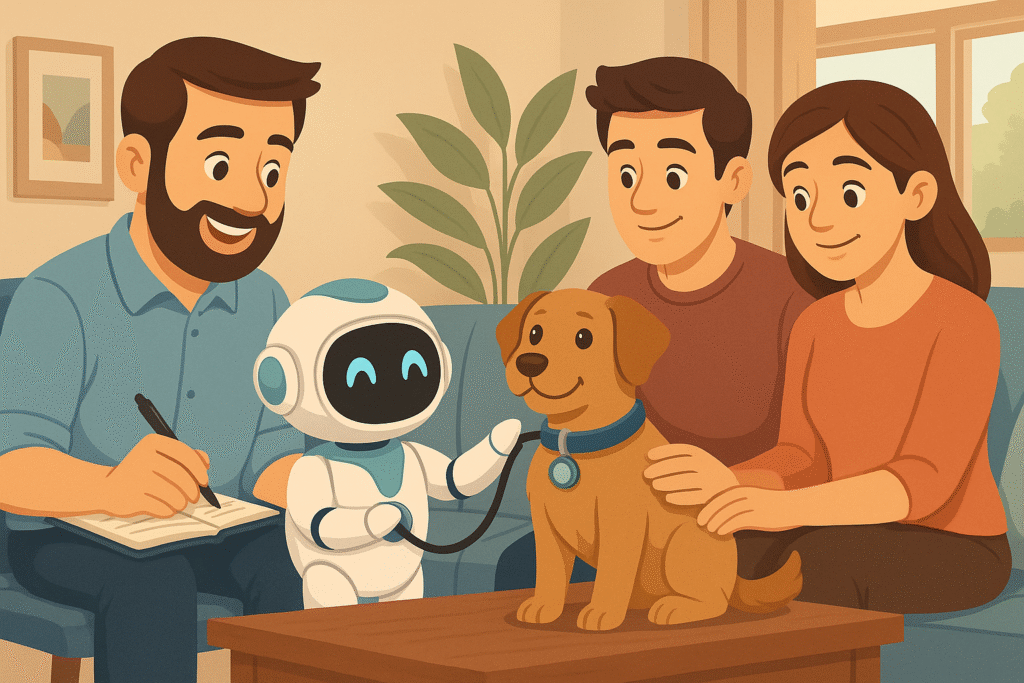
The relationship between humans and pets has always been marked by affection, care and a healthy dose of trial and error in communication. But what if we could understand more clearly what our pets are feeling? With advancements in technology, Artificial Intelligence for Pets is no longer science fiction — it is becoming a tangible reality, opening fresh possibilities to enhance animals’ quality of life and strengthen the bonds with their caregivers.
What is Artificial Intelligence for Pets?
The term Artificial Intelligence for Pets refers to the use of machine learning algorithms, computer vision and data analysis to interpret behavior, body language, sounds and even sleep or feeding patterns in domestic animals. These technologies can, for example, detect early signs of stress, pain, anxiety or happiness, providing valuable insights for pet owners and veterinary professionals.
A practical example is the analysis of a cat’s meow. An AI system can detect subtle differences in tone and frequency that indicate distinct needs — hunger, pain or the desire to play.
Startups and Companies Innovating with AI for Pets
In recent years, many startups have emerged with a dedicated focus on applying technology to decode the emotional world of animals. Artificial Intelligence for Pets has become a rising sector within the pet‑tech market.
- Petpuls – A smart dog collar that uses AI to interpret barks and correlate them with emotions like joy, anxiety or sadness. [oai_citation:0‡PetpulsLab](https://www.petpuls.net/en?utm_source=chatgpt.com)
- AI for Pet (TTcare) – A Korean startup whose app uses AI to detect early health signals and plans to integrate behavioral and emotional states. [oai_citation:1‡Google for Startups](https://startup.google.com/alumni/stories/ai-for-pet/?utm_source=chatgpt.com)
- Dogstar Life – A platform employing machine learning to assess the overall wellbeing of dogs, including sleep tracking, agitation monitoring and vocalization analysis.
- Petnow – A Korean app that recognizes pets’ nose prints as biometric identification, promoting security and traceability.
These solutions combine sensors, cameras, microphones and algorithms to deliver real‑time data, assisting in behavioral diagnostics and care decisions.
How AI Recognizes Emotions in Pets
Identifying emotions in pets involves multiple approaches, all grounded in data collection and interpretation. Artificial Intelligence for Pets learns from large volumes of examples, classifying patterns that indicate specific emotional states.
The main sources of information include:
- Facial expression – Some animals, like cats and dogs, express pain and discomfort via micro‑expressions (e.g., ears pulled back, half‑closed eyes).
- Body language – Posture, tail position, head tilt and overall movement are strong indicators of emotional state.
- Vocalizations – Barks, meows and other sounds are converted into spectrograms analysed by AI.
- Biometric data – Heart rate, breathing and body temperature (when monitored) are also used to identify stress or wellbeing.
Using this data, deep learning models are trained to “understand” feelings. Interestingly, over time the AI adapts to the peculiarities of each animal, becoming more accurate for that specific pet.
Practical Example: AI Helping Detect Pain in Cats
One of the biggest challenges for pet owners and veterinarians is identifying when an animal is in pain. Cats, especially, tend to hide symptoms instinctively.
With AI this obstacle is being overcome. For instance, the startup Tably uses a standard smartphone camera to analyse a cat’s facial expression, based on the Feline Grimace Scale – a scientifically validated scale for pain in felines.
With a simple scan, the system can indicate if there is a likelihood of pain, helping the pet owner seek veterinary help at the right time.
AI in Dog Behavior and Well‑Being
With dogs, the focus of Artificial Intelligence for Pets is mainly on recognizing emotional states and alerts for unusual behavior. Startups such as PupTech monitor dogs’ routines with smart collars that capture movement, vocalization and temperature data.
When the AI detects abrupt changes — for example an increase in restlessness at night or excessive vocalization — a notification is sent to the owner, indicating possible stress, boredom or even physical pain.
This continuous analysis also allows for the identification of happiness patterns. For example, a dog that moves more, barks in a higher tone and responds quickly to stimuli may be in a positive state — which helps reinforce effective care practices.
AI + Wearables = A Revolution in Pet Health
Beyond understanding emotions, AI integrated with wearables is transforming how we monitor pet health. Devices like the FitBark collar offer tracking of physical activity, calories burned, sleep quality and even licking or scratching patterns.
These data are interpreted by AI and turned into easy‑to‑view dashboards. The owner gains a comprehensive view of the pet’s wellbeing, facilitating early detection of diseases or chronic discomfort.
The best part: these solutions are already available in retail, connecting pets and technology in a practical everyday way.
What Are the Challenges of This Technology?
Despite advances, Artificial Intelligence for Pets still faces some obstacles. The diversity of breeds, ages, histories and behaviors complicates the creation of universal models. Moreover:
- Animals’ emotions are interpretive and often subjective.
- The AI must be trained with ethical data and validated by animal behavior experts.
- There is a risk of over‑interpretation — treating every behavior as a problem.
- Data privacy and security are growing concerns.
Therefore, the role of pet owners and veterinarians remains essential. AI should be an ally, not a replacement for human care.
The Future: Better Understood Pets and Improved Care
The scenario is promising. With advancing sensor technologies, vocal recognition and language models, Artificial Intelligence for Pets is becoming increasingly effective at understanding the emotional universe of animals.
In the near future, it will become common for owners to receive weekly wellbeing reports, personalised alerts and even environmental enrichment recommendations based on the behavioral profile of the pet.
AI for Pets may represent a silent revolution, where empathy is amplified through technology — and animals gain more voice in the digital world.
Final Thoughts
Understanding our pets’ feelings is no longer just a matter of intuition. With Artificial Intelligence for Pets, we are entering a new era of human–animal connection, grounded in data, science and accessible technology.
Whether through smart collars, facial‑recognition apps or behavioural sensors, the tools are evolving to provide valuable insights into the well‑being of the animals we love so much.
And most importantly, will AI learn to speak “whale”?
📣 Interested in learning more?
Check out the following linked articles to expand your knowledge about AI and animal technology:
Subscribe to our newsletter for exclusive content, PDFs and practical materials on AI, technology and everyday life.
🔍 Frequently Asked Questions (FAQ)
- 1. Does AI really understand what my pet feels?
It interprets patterns that indicate emotions, but does not replace veterinary diagnosis. - 2. Do these devices work for all breeds?
Some are calibrated for specific breeds or sizes. Check compatibility. - 3. Is AI for pets safe?
Yes — if solutions adhere to good privacy and security practices. - 4. Can I use AI without wearable devices?
Yes — apps like Tably use just the smartphone camera. - 5. Can AI detect diseases in pets?
It flags warning signs, but diagnosis is the vet’s responsibility. - 6. Can AI help pets with anxiety?
Yes! It detects stress patterns and helps owners act proactively.